

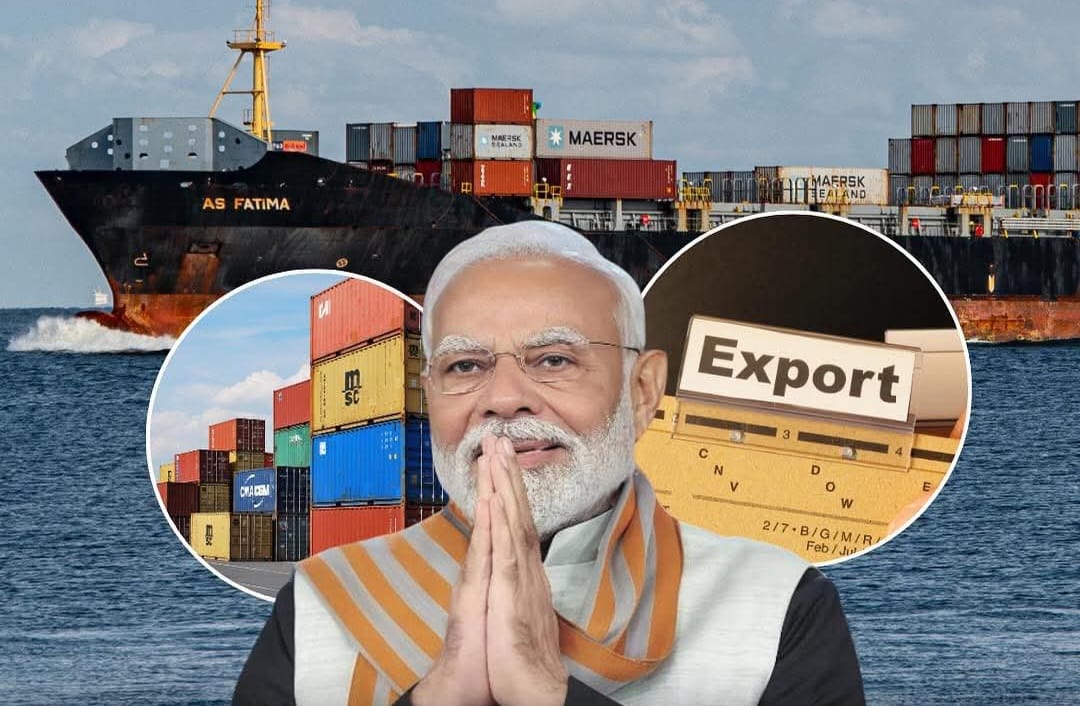
Young Indians Redefine Exports: Starting Global Businesses Under ₹1 Lakh
New Delhi: Breaking the long-held belief that exports require large factories, warehouses, and heavy capital investment, a growing number of young Indian entrepreneurs are successfully entering global markets with minimal investment—often under ₹1 lakh.
Contrary to traditional assumptions, these first-time exporters are building profitable businesses by focusing on simple sourcing models, smart digital tools, and third-party logistics support, without owning manufacturing units or large infrastructure.
Low-Investment, High-Potential Approach
Many new exporters are starting with locally available, high-demand products such as makhana, jaggery, turmeric, spices, rice, dry fruits, arecanut, and handicrafts. Instead of manufacturing, they source quality products directly from farmers, traders, or local producers and sell them to international buyers.
Simple and Affordable Legal Setup
The legal requirements to begin exporting have also become more accessible. Entrepreneurs can start by obtaining an Importer Exporter Code (IEC) from the Directorate General of Foreign Trade (DGFT) at a nominal cost. Depending on the product category, GST registration may be required, along with opening a current bank account—making the process both affordable and fast.
Digital Platforms Replace Offices
Rather than investing in overseas offices or showrooms, exporters are finding buyers through online B2B platforms such as Alibaba, IndiaMART, TradeIndia, and ExportersIndia. Many also directly reach out to small importers, wholesalers, and ethnic stores abroad through email and digital networking.
Testing Markets with Small Shipments
Instead of shipping full containers, new exporters typically begin by sending small sample consignments via courier. This allows them to verify product quality, pricing, buyer credibility, and payment terms before scaling operations.
Logistics Without Warehouses
Third-party logistics providers and freight forwarders manage shipping, documentation, and customs clearance, eliminating the need for exporters to maintain warehouses or complex supply chains.
Focus on Secure Payments
To reduce risk, beginners are advised to work with advance payments, letters of credit (LC), or escrow mechanisms, avoiding credit-based sales during initial stages.
A Growing Trend in Indian Entrepreneurship
Experts say this model reflects a shift in India’s entrepreneurial landscape, where technology, simplified regulations, and global demand are enabling small players to go international. The trend aligns closely with the government’s Startup India, Make in India, and Aatmanirbhar Bharat initiatives.
As more young Indians embrace this practical, low-risk approach to exports, India’s presence in global trade is expanding—not through massive factories, but through smart, agile entrepreneurship.

By:- Praveen Shivalingaiah