

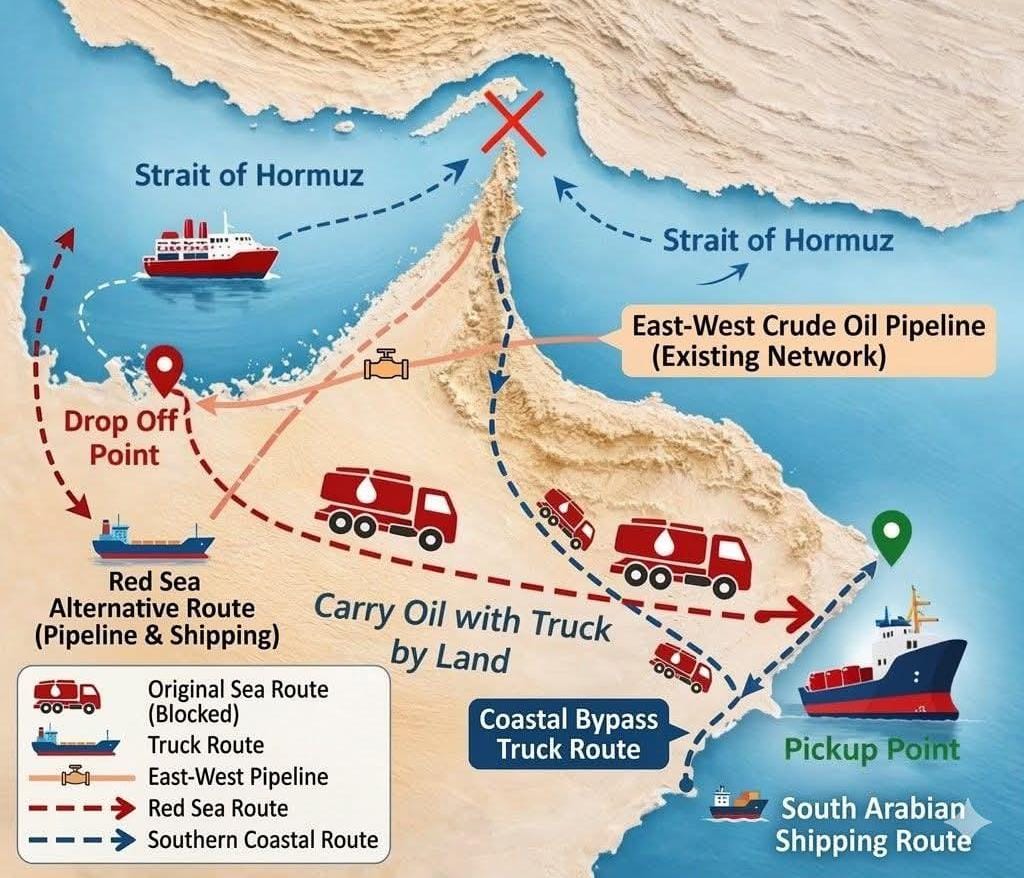
Alternative Oil Transport Strategies: Exploring Strait of Hormuz Bypass Options
New Delhi | March 14, 2026:
With the Strait of Hormuz remaining a critical chokepoint for nearly 20% of global oil supply, countries and energy firms are increasingly exploring alternative oil transport strategies to reduce dependency on this vulnerable maritime corridor.
Experts say bypass options could include expanding pipelines such as the Abu Dhabi Crude Oil Pipeline to the United Arab Emirates’s Gulf ports, developing overland routes through Oman and Saudi Arabia, and investing in new storage and shipping hubs along safer maritime routes.
Analysts note that while these alternatives require significant investment and international cooperation, they could provide strategic resilience against disruptions caused by geopolitical tensions, attacks on commercial vessels, or potential closures of the Strait.
Industry insiders also emphasize that diversifying oil transport routes is not only critical for global energy security but also for stabilizing markets and ensuring uninterrupted supply to energy-dependent nations.
As the region remains geopolitically sensitive, energy planners worldwide are weighing the costs, risks, and benefits of such bypass strategies, signaling a potential shift in how crude oil is transported globally.
Hind Samachar News Desk

By:- Divya Sisel