

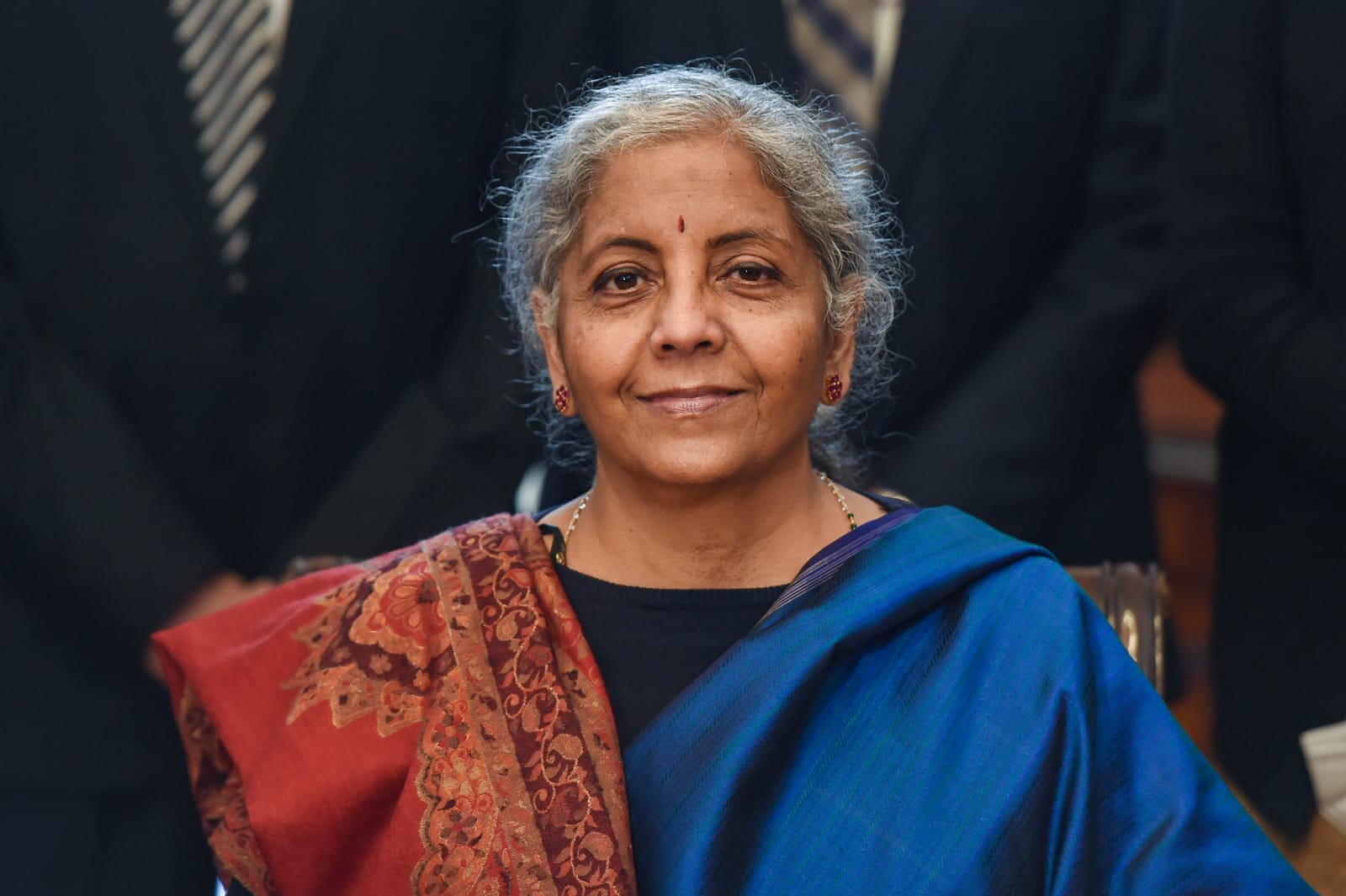
Union Budget 2026: Nirmala Sitharaman Presents a People-Centric Roadmap for a Viksit Bharat
New Delhi | Hind Samachar News :
Finance Minister Nirmala Sitharaman presented the Union Budget 2026–27 with a clear focus on economic growth, infrastructure expansion, job creation, and ease of living for citizens. While maintaining fiscal discipline, the Budget lays strong emphasis on manufacturing, healthcare, agriculture, MSMEs, and technology-driven governance, aiming to strengthen India’s journey towards a Viksit Bharat.
This is the Finance Minister’s ninth consecutive Budget, reflecting continuity in reforms while addressing emerging challenges of a rapidly evolving economy.
No Change in Income Tax Slabs, Focus on Simplicity
In a move that brings stability for taxpayers, the government has not altered income tax slabs. Instead, the emphasis has been placed on simplifying compliance and reducing procedural burdens.
Key announcements include:
Introduction of Nil Deduction Certificates for eligible small taxpayers to avoid unnecessary TDS.
Simplification of Income Tax Return forms.
Extension of timelines for filing and revising returns.
Impact: Middle-class taxpayers benefit from reduced paperwork, smoother filing, and improved cash flow.
Record Push for Infrastructure and Connectivity
The Budget announces a record capital expenditure of ₹12.2 lakh crore, reinforcing infrastructure as the backbone of economic growth.
Major initiatives include:
Development of seven new high-speed rail corridors connecting major cities.
Expansion of national highways, logistics parks, and freight corridors.
Development of 20 new national waterways to reduce logistics costs.
Impact: Faster transportation, job creation, regional development, and stronger supply chains.
Manufacturing and Technology Get Major Boost
To strengthen India’s self-reliance, the government unveiled several initiatives:
India Semiconductor Mission 2.0 to boost domestic chip manufacturing.
Support for rare earth minerals extraction to reduce import dependency.
Launch of the Biopharma Shakti Initiative to position India as a global pharmaceutical hub.
Impact: High-skill employment opportunities, stronger industrial base, and global competitiveness.
Agriculture and Rural Development
Farmers remain a key focus of Budget 2026. New technology-driven initiatives aim to improve productivity and income.
Key measures:
Launch of Bharat Vistar, an AI-based multilingual platform providing advisory services to farmers.
Support for women-led rural enterprises through She-Marts and cluster-based development.
Strengthening agri-logistics and storage infrastructure.
Impact: Better decision-making for farmers, higher incomes, and rural entrepreneurship.
Healthcare: Affordable Medicines and Better Infrastructure
Healthcare received targeted support with a focus on affordability and access.
Customs duty waived on 17 cancer and rare disease medicines, reducing treatment costs.
Expansion of integrated healthcare hubs and AYUSH institutions.
Increased focus on mental health services.
Impact: Lower medical expenses and improved healthcare access, especially for vulnerable sections.
Strong Support for MSMEs and Startups
Recognizing MSMEs as the backbone of employment, the government announced:
A ₹10,000 crore MSME Growth Fund.
Enhanced credit access and technology support.
Continued backing for startups under the Self-Reliant India initiative.
Impact: Growth opportunities for small businesses, job creation, and local economic development.
Tourism, Youth, and Sports Promotion
The Budget also focuses on cultural and human capital development.
Upgradation of key tourist and pilgrimage destinations.
Establishment of hospitality and tourism training institutes.
Expansion of the Khelo India Mission to nurture sporting talent.
Impact: Boost to tourism economy, youth engagement, and global sporting aspirations.
Governance and Financial Reforms
Key governance reforms include:
Formation of a committee to study the impact of Artificial Intelligence on services.
Encouragement of municipal bonds for urban infrastructure.
Trust-based customs and trade facilitation reforms.
Impact: Transparent governance, improved investment climate, and future-ready policymaking.
Conclusion
The Union Budget 2026–27 strikes a balance between growth and welfare, focusing not on populist giveaways but on long-term structural strength. With strong infrastructure investment, technology adoption, healthcare relief, and support for farmers and small businesses, the Budget aims to ensure inclusive and sustainable development.
By prioritizing ease of living, job creation, and self-reliance, the Budget sets a confident direction for India’s economic future.