

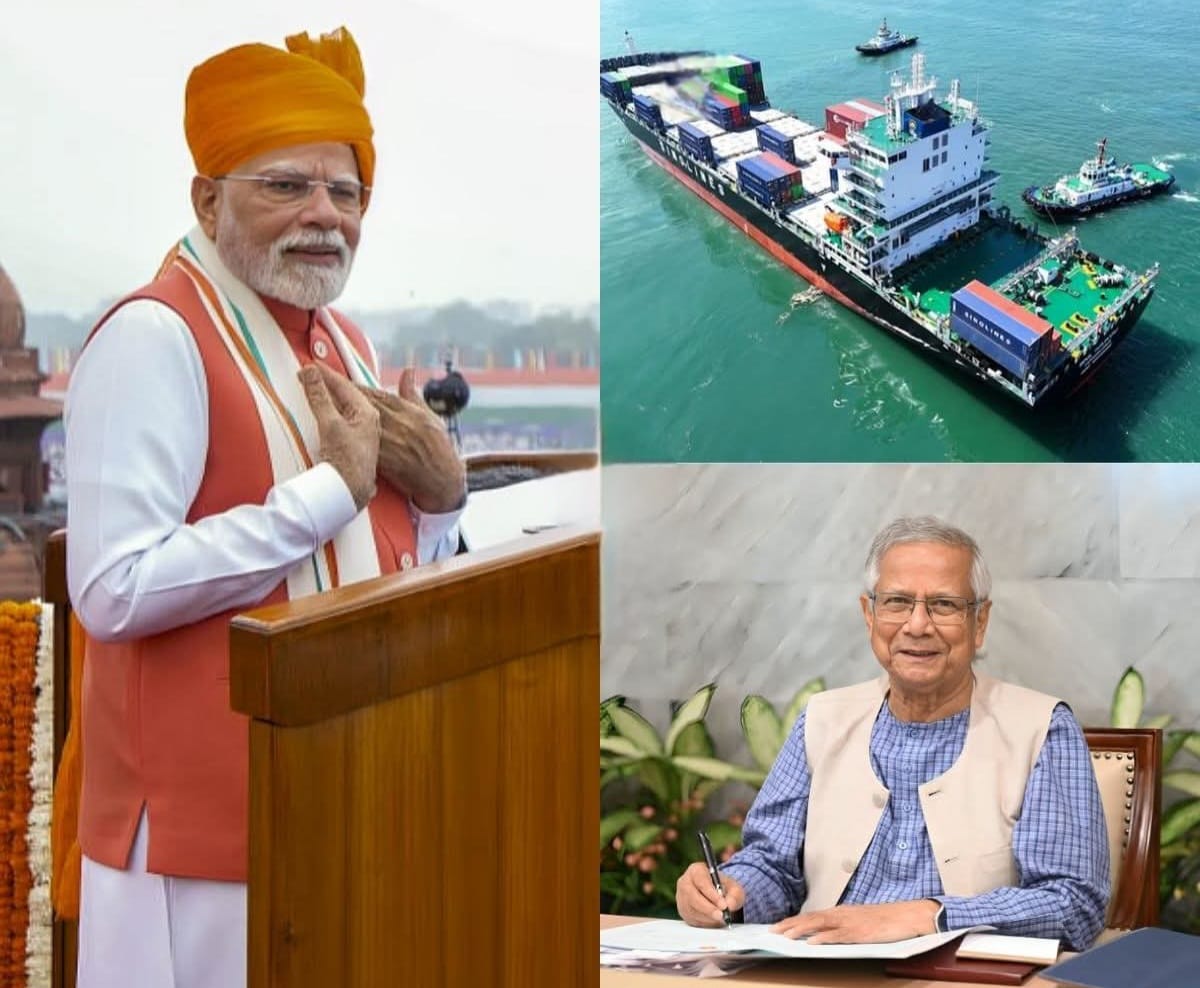
India Withdraws Bangladesh Transshipment Facility, Sending a Clear Strategic Signal
New Delhi: India has withdrawn the transshipment facility that allowed Bangladesh to move export cargo to third countries through Indian ports, airports and land customs stations, marking a significant shift in regional trade facilitation and logistics policy.
The facility, operational since June 2020, was formally withdrawn with immediate effect through a circular issued by the Central Board of Indirect Taxes and Customs (CBIC). A limited grace period has been granted only for Bangladeshi cargo that had already entered Indian territory to complete its onward movement.

For Premium Natural Incense contact : Mob :- +91 9480323449
Capacity Constraints Cited
Explaining the decision, Ministry of External Affairs spokesperson Randhir Jaiswal said that increasing congestion at Indian ports and airports had begun to adversely affect domestic exporters. Delays, rising logistics costs and operational backlogs meant that a facilitative arrangement had turned into a bottleneck.
“The priority is to ensure smooth and cost-effective movement of Indian exports,” officials indicated, underlining that infrastructure capacity must align with national economic interests.
Regional Commitments Intact
India has clarified that the withdrawal does not affect its international transit obligations. Transit facilities for Nepal and Bhutan remain unchanged, signalling that New Delhi is not stepping back from broader regional connectivity commitments.

For Premium Natural Incense contact : Mob :- +91 9480323449
Diplomatic Undertones
The timing of the move has drawn attention in diplomatic circles. It comes shortly after comments by Muhammad Yunus, who suggested that India’s Northeast depends on Bangladesh for access to the ocean—remarks that triggered political reactions in India.
Assam Chief Minister Himanta Biswa Sarma welcomed the withdrawal, calling it a firm assertion of national interest under the leadership of Prime Minister Narendra Modi.
Impact on Bangladesh
With the facility withdrawn, Bangladeshi exporters will need to reroute cargo through alternative channels, likely increasing both transit time and costs. For India, the move is expected to ease congestion, improve turnaround times for domestic exporters and reinforce the principle that trade facilitation must be balanced with capacity and strategic considerations.

For Premium Natural Incense contact : Mob :- +91 9480323449
Strategic Message
The decision underscores a larger reality in South Asia: logistics and infrastructure are not merely economic tools but instruments of strategy. Access, throughput and connectivity increasingly shape diplomatic leverage alongside traditional policy tools.
Bottom line: India’s pause on Bangladesh transshipment highlights how trade logistics and geopolitics are deeply intertwined—and how capacity constraints can quickly become strategic statements.

By:- Meghana Ganesh